Start with the fabric, because its fibre largely decides which methods will work. Cotton suits screen and DTF. Polyester suits sublimation, DTF and silicone. Blends need a closer look, and delicate fabrics need testing. Once the fabric narrows the options, your artwork and quantity usually make the final choice.
The main methods
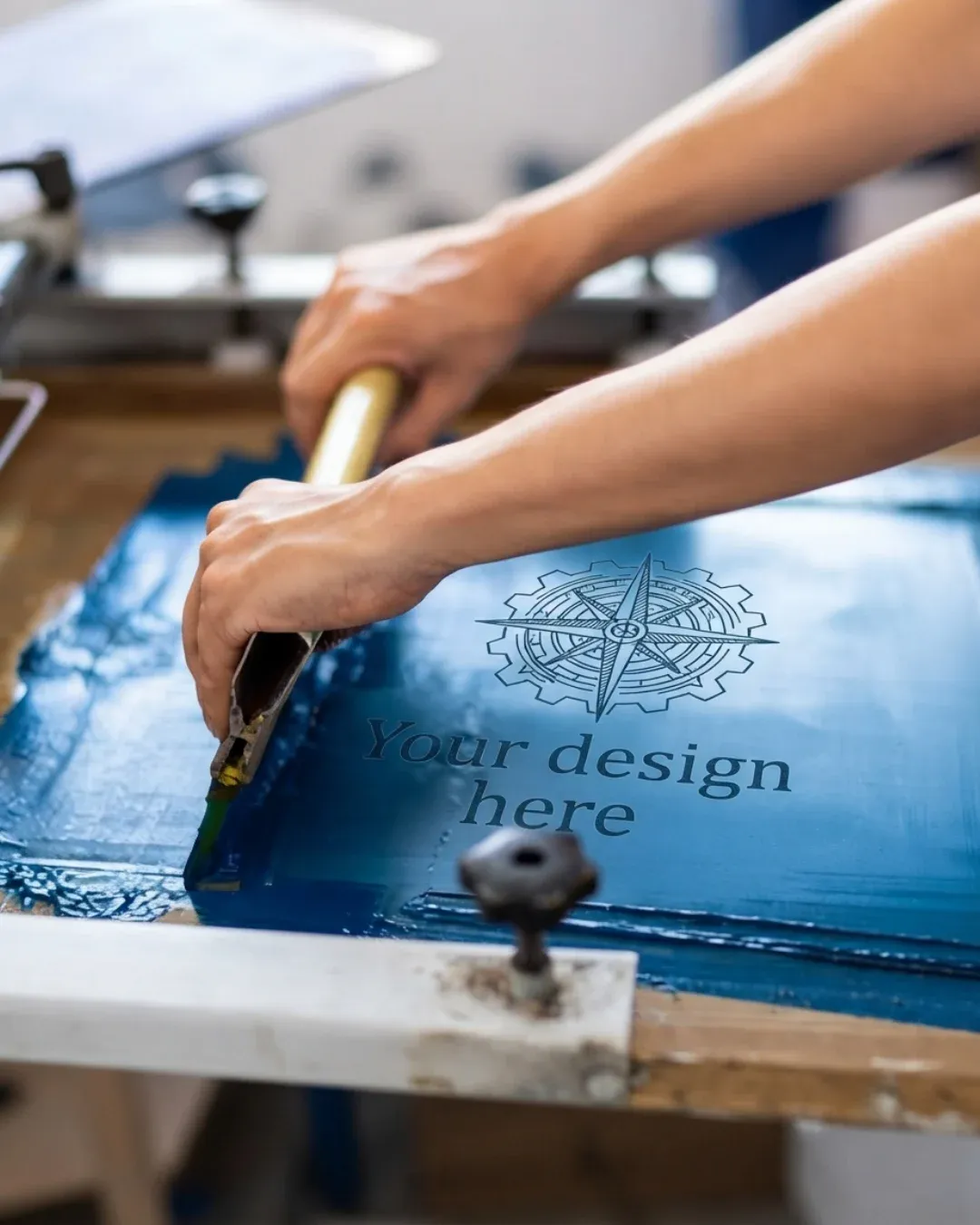
- Silicone screen printing: silicone ink pushed through a screen, one screen per colour. It suits repeat production of simple designs and gives a soft, flexible finish.
- DTF: a design printed on film and heat-pressed on. There are no screens, so it suits short runs, full-colour art and mixed fabrics. It adds a thin layer on the surface.
- Sublimation: dye turned to gas under heat so that it bonds with polyester fibres. It adds almost no feel, but it needs light polyester and does not work on cotton.
- Digital printing on rolls: fabric printed by the length with a dye chosen to suit the fibre. It suits all-over patterns and fashion or furnishing fabric, and it is usually a specialist job with its own minimum lengths.
- Embroidery: strictly speaking not printing, but often the alternative. It suits polos, jackets and caps where a formal, long-lasting logo matters more than fine detail.
Fabrics, and how each one behaves
Cotton is comfortable and takes print well, which is why it remains the default for T-shirts and casual wear. It can shrink, and a coarse weave makes fine detail look rougher. Ask whether the fabric has been pre-shrunk if fit matters.
Polyester is strong, quick-drying and holds its shape. It is the natural base for sportswear, flags and all-over sublimation. Watch for dye migration on dark or bright polyester, where fabric dye can move into a light print under heat.
Poly-cotton blends are a common choice for uniforms because they balance comfort with easy care. A blend will not sublimate as brightly as pure polyester, since the dye bonds only with the polyester part, so screen or DTF are usually safer.
Satin and similar smooth fabrics give scarves, sashes and table runners a dressy look with strong colour. They can mark under pressure and heat, and they often fray at cut edges, so finishing matters.
Heavy canvas and drill work well for bags and workwear. Thick weaves take strong, simple prints better than very fine artwork.
Stretch knits need a print that moves with them. A rigid print can crack when stretched, so test by pulling the printed area before you approve.
A simple way to decide
- End use: will it be worn daily, used once at an event, or sold in a shop? Daily wear justifies more spending on durability.
- Fabric: find out the composition, or send a swatch. A label reading only silk feel or cotton feel tells a printer very little.
- Artwork: count the colours, and check for photos or gradients.
- Quantity: small runs lean towards DTF, and large repeat runs lean towards screen.
- Print position: a placed logo can go on a finished garment, while a pattern crossing seams usually means printing panels before sewing.
- Deadline: new screens, samples and fabric sourcing all need time, so raise the date early.
Practical points for Saudi buyers
Heat changes which fabric people will actually wear. In a Riyadh summer, a heavy cotton or a large solid print can feel uncomfortable outdoors, so lighter fabrics and smaller print areas are worth considering for staff who work outside. Humid coastal areas such as Jeddah and the Eastern Province make quick-drying fabrics more attractive. Strong sun also fades colours over time, particularly on items displayed outdoors.
Arabic text needs care in any method. Thin strokes and small dots can fill in or disappear, especially on textured fabric, so set Arabic lettering at a generous size and check a proof at actual size.
If you plan to sell printed garments or textiles at retail, ask your supplier and check the current labelling and product requirements with the relevant Saudi authorities, as these can change and depend on the product.
Before you commit to a full run
Ask for a sample on your actual fabric. Wash it, rub it, stretch it and leave it in the sun. Pre-wash a swatch and measure it if shrinkage could affect fit.
Our factory runs automatic silicone screen printing and DTF in-house, and other methods such as sublimation and panel printing are available on request. Send us the fabric details or a swatch along with your artwork and quantity, and we will advise on the method through a free design consultation.
Textile printing applies logos, patterns and full designs directly to fabric and finished garments rather than to a single shirt type. Exhibition Printing Riyadh runs silk screen, silicone screen and DTF lines in its Riyadh factory for fabric used at stands and events, branded garment ranges and uniform suppliers, with sampling on request and delivery throughout Saudi Arabia.