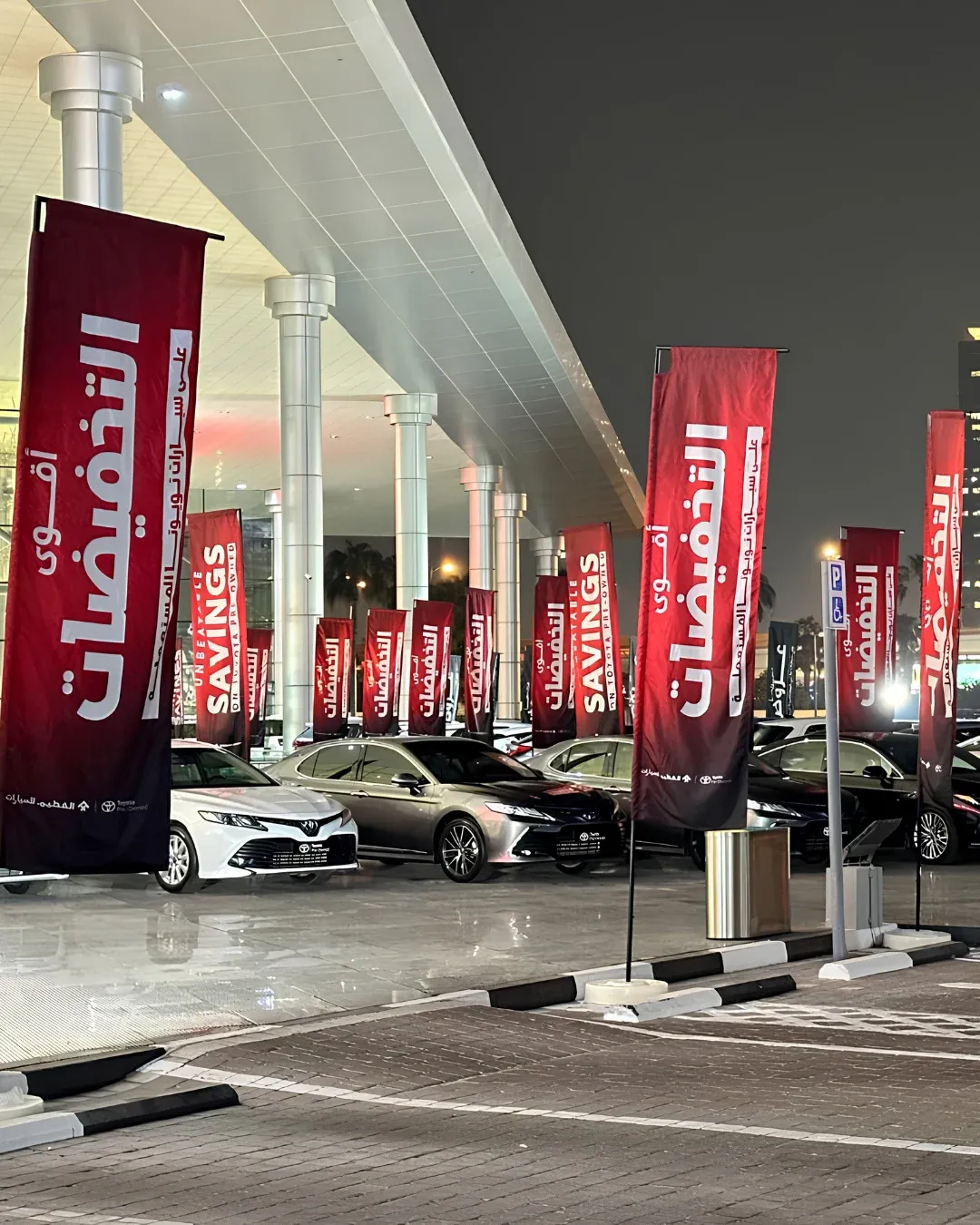
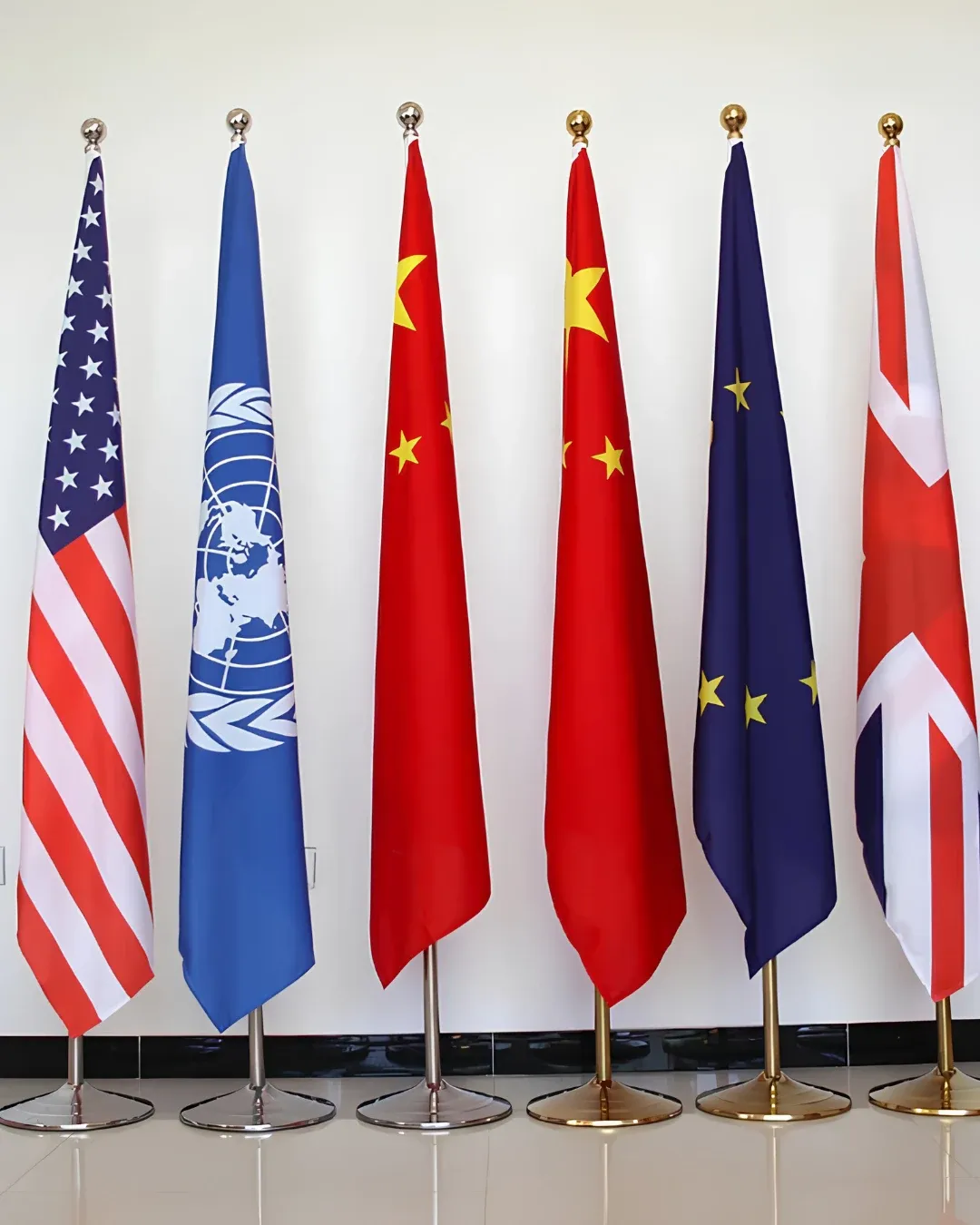
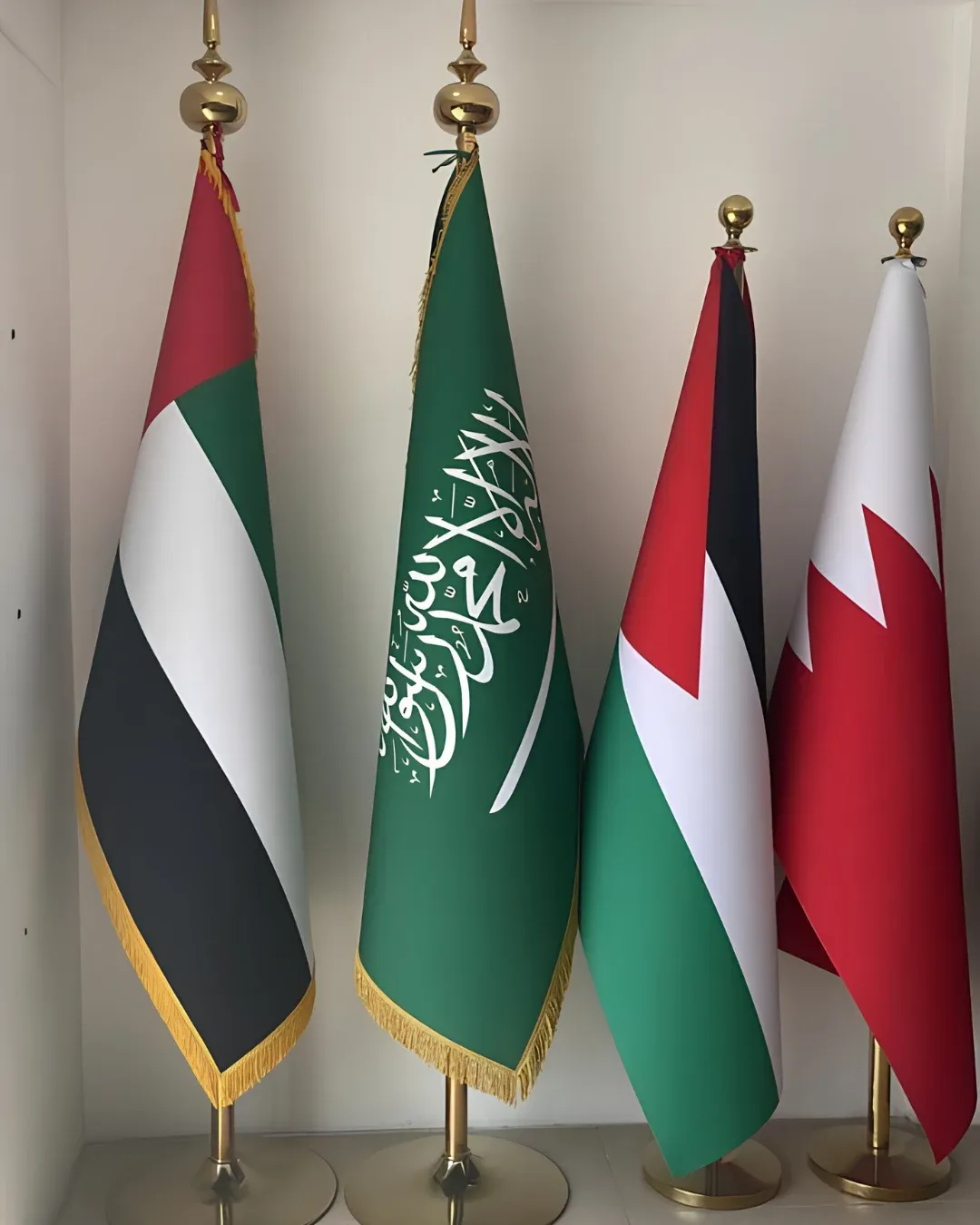
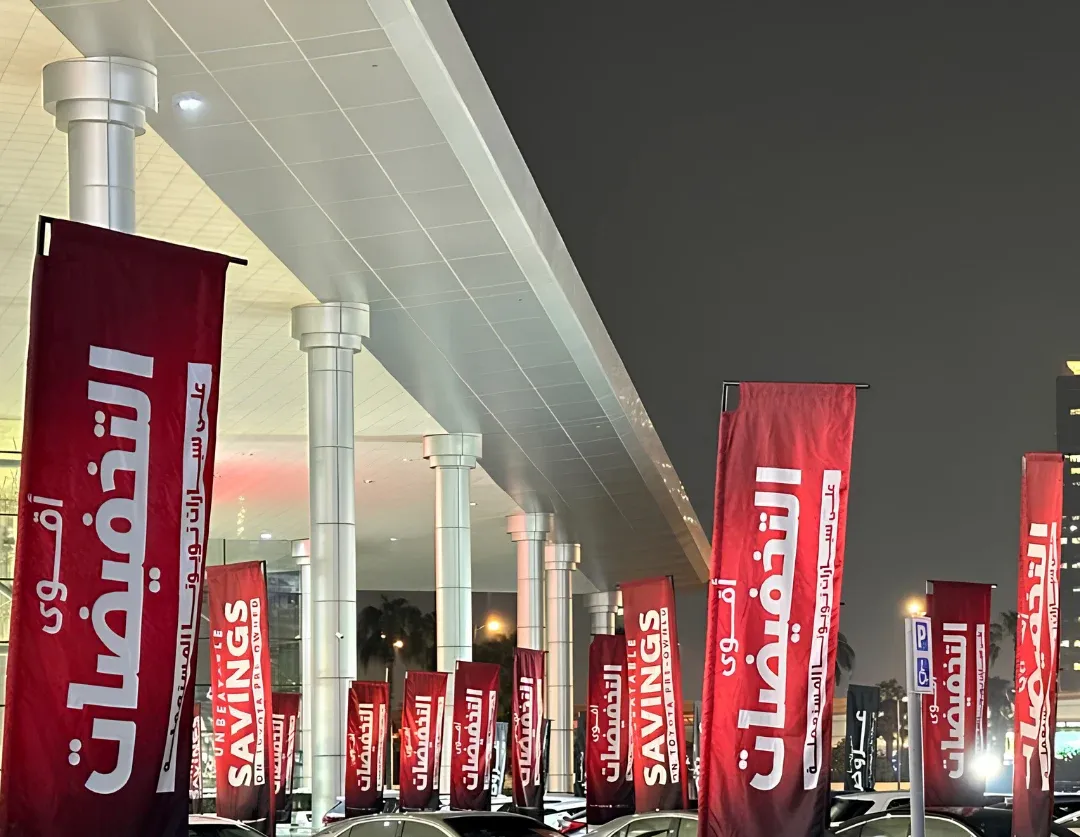
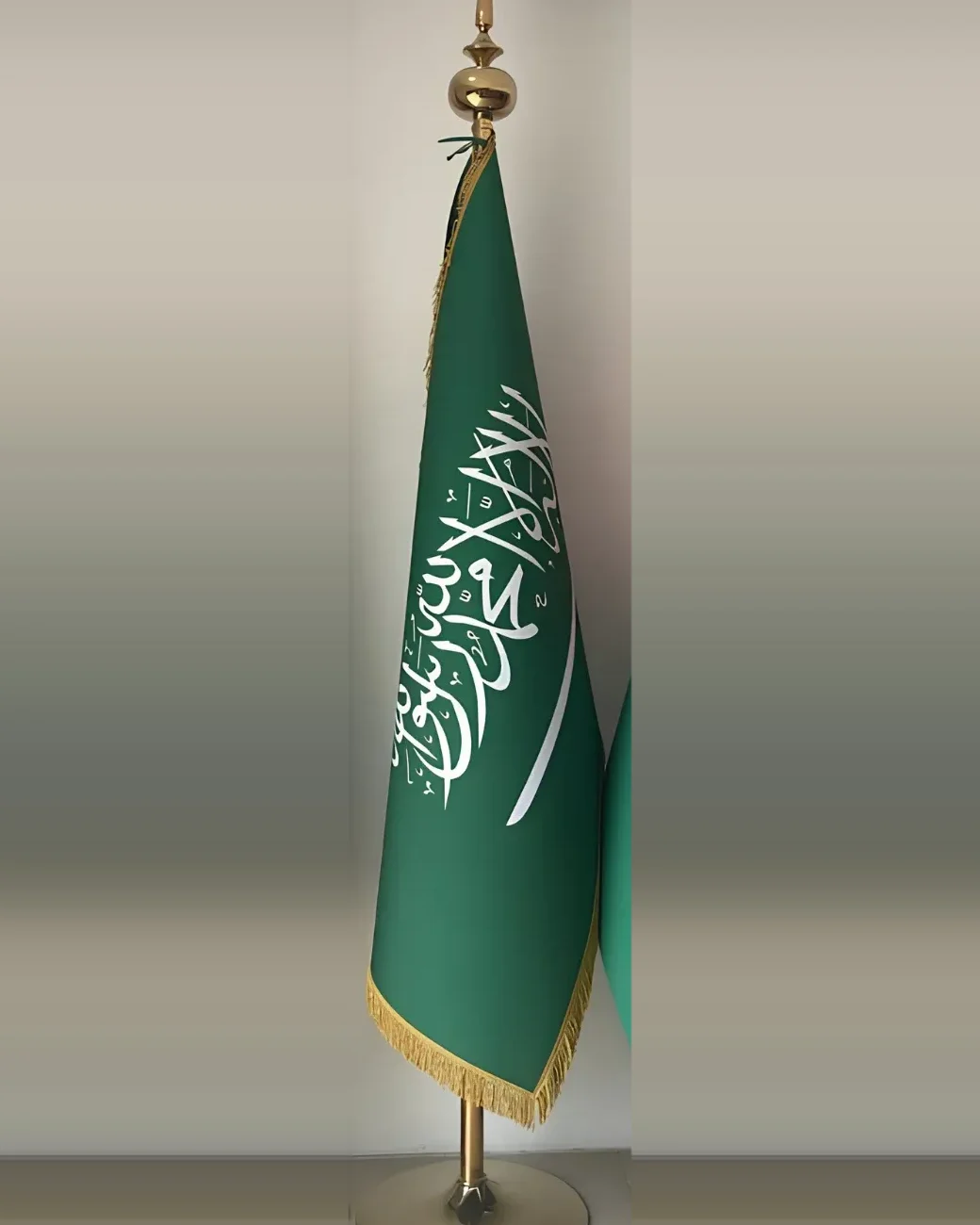
Outdoor flags fly your logo on a pole outside a headquarters, hotel, worksite or exhibition venue, day after day in Saudi sun, dust and wind. We print them in Riyadh on climate-durable fabric with reinforced finishing, suggest a size to match your pole height, and keep your artwork on file for planned replacements across the Kingdom.
A pole flag is the one piece of branding that never closes. It works through the weekend, through the summer and through every sandstorm, which is exactly why it fails if it is specified like an indoor banner. Our outdoor flags are made for that workload, with fabric chosen to cope with heat and ultraviolet light and finishing planned for a flag that is rarely still.
The fly end takes the punishment. Wind whips the free edge all day long, so that is where reinforced hems and stitching earn their keep. Fixings depend on your pole: sleeves, rope and toggle sets or grommets are all available on request, and poles themselves are available on request if you are starting from scratch. Give us the pole height and the distance from which people will see it, and we will recommend proportions that read clearly from the road.
No outdoor flag lasts forever. Colour softens and edges wear, faster at exposed sites, so facilities teams at head offices and worksites usually schedule a replacement cycle. Reordering is simple because we keep your artwork, and standard production typically takes 2 to 5 business days plus delivery anywhere in Saudi Arabia.
Who orders this
Company headquarters
Factories and industrial sites
Hotels and resorts
Malls and retail parks
Government and public buildings
Which materials work best outdoors?
Knitted polyester is the common choice: it is light, flies easily, lets some wind through and takes colour well. Heavier woven polyester is tougher and suits larger flags and windier sites, though it needs more wind to lift and costs more. Nylon is sometimes used for bright colours. For most Saudi rooftops and entrances, polyester is the sensible default. Tell us the pole location and wind exposure, and we will suggest a fabric.
How do I slow fading and fraying?
Good stitching at the fly end makes a real difference, so ask about reinforced hems and extra rows of stitching. Avoid poles near walls, sharp corners or cables, because contact shreds fabric faster than wind. Check the flag regularly and take it down in high winds or dust storms when you can. Rotating two flags also helps, because you can wash one while the other flies.
How do I clean an outdoor flag and when do I replace it?
Dust wears fibres as well as dulling colour. Wash the flag from time to time in cool water with a mild detergent, then let it dry fully before rehanging. Replace it once the colours look tired or the fly end has started to split, because a damaged flag sends the wrong message about the business under it. Many companies keep a spare ready, so a change is simple.
Outdoor Flags: options compared
Option
Best for
Good to know
Knitted polyester
Most pole flags in moderate wind
Light and quick to fly, with fabric confirmed at quote
Heavier woven polyester
Larger flags and windier sites
Tougher, but needs more wind to lift, on request
Rope and toggle fixing
Standard halyard poles
Check your pole's fitting before ordering
Pole sleeve
Fixed or wall-mounted short poles
Sleeve size must match the pole diameter
Grommets with reinforced header
Buildings and fence-mounted flags
Suits fixed anchors, and details are on request
What affects the price of Outdoor Flags
01
Flag sizeLarge flags need more fabric, ink and reinforced stitching.
How long does an outdoor flag last in Saudi Arabia?
It depends on sun, wind and site exposure, so no exact lifespan can be promised. Many companies plan regular replacements to keep their flags looking sharp.
What size flag should I order for my pole?
A flag should suit the pole height and how far away people will view it. Send us the pole height and we will recommend a size.
Do you supply flag poles too?
Poles and fixings are available on request. If you already have a pole, tell us its fitting type so we can match the flag finishing.
Should I take the flag down during a dust storm?
Yes, if you can do so safely, because strong wind and dust shorten a flag's life quickly. A simple routine for storm days saves replacement costs.
Why does the end of the flag fray first?
The fly end whips most in the wind, so it takes the greatest strain. Reinforced stitching helps, and trimming and re-hemming early can extend the life.
Is it worth ordering a spare flag?
Often yes, because rotating two flags allows for washing and gives you a backup if one is damaged. It also avoids a bare pole while a new one is made.