Directional signage is the system of arrows, names and symbols that moves people through a venue, building or site without asking for help. Exhibition Printing Riyadh plans and produces bilingual wayfinding in Riyadh for exhibition halls, hospitals, malls, campuses and offices, and installs it across Saudi Arabia.
At a conference, the first thing a delegate looks for is registration, then the hall, then the coffee. In a hospital it is the clinic, the pharmacy, the exit. Directional signage exists for those moments, and it is judged on one thing: did the person find the way without stopping to ask.
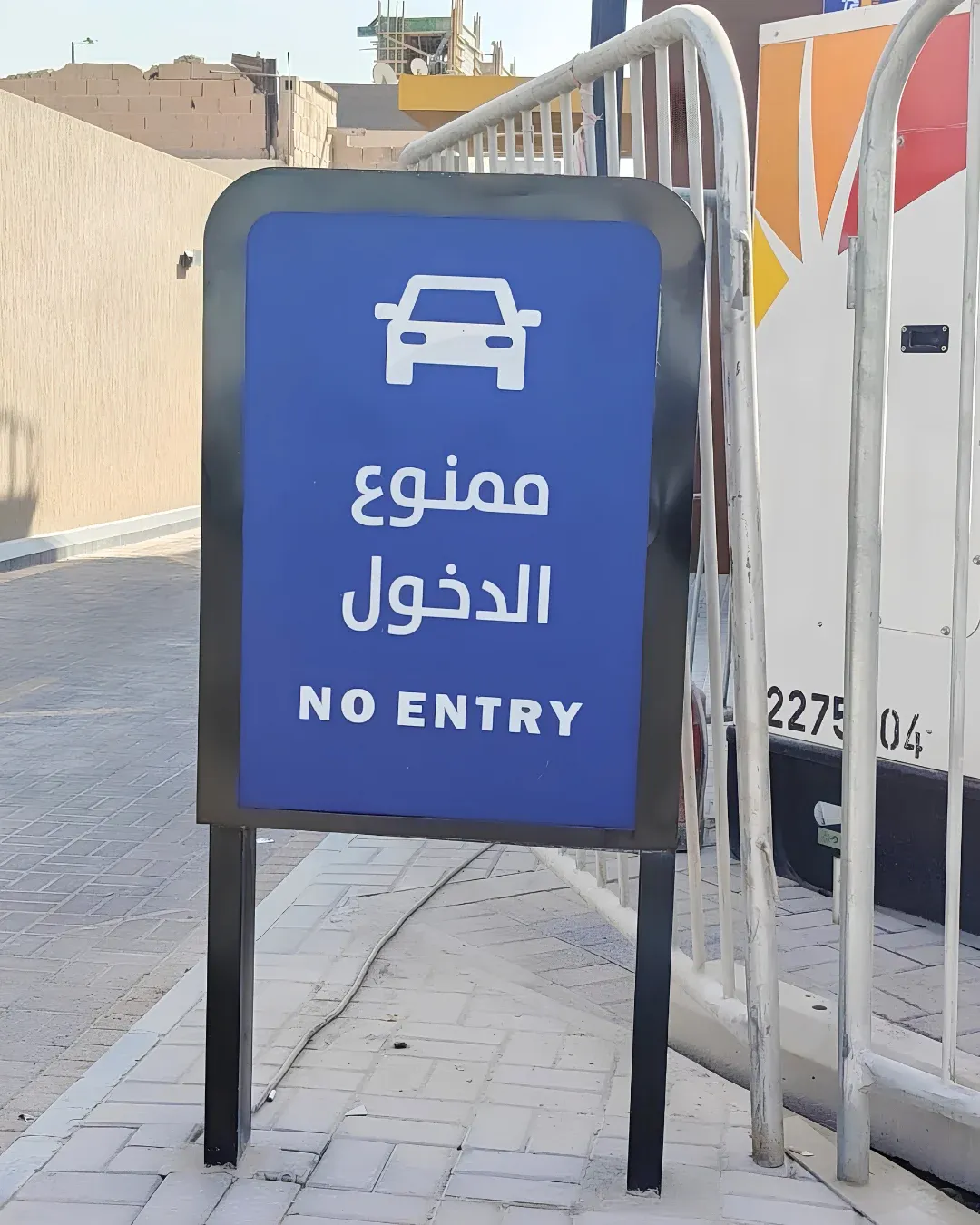
We start on paper, not on the wall. From your floor plan or site map we mark the decision points, the places where a corridor splits or a lobby opens onto several routes, and assign one sign to each. Wording stays identical from sign to sign, Arabic and English are balanced so neither language looks like an afterthought, and pictograms carry the message where text is slow to read.
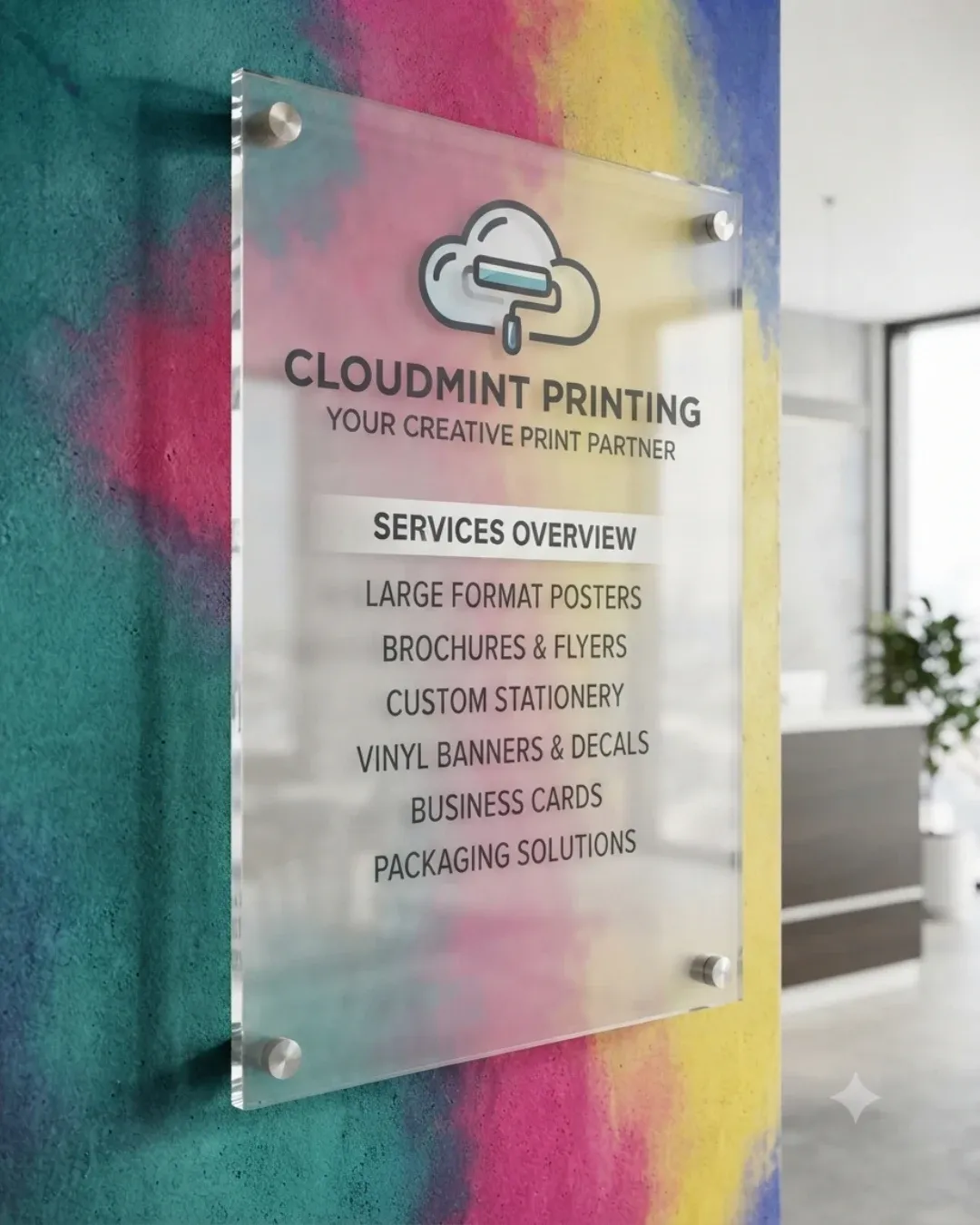
Formats match the place: wall panels and door signs for offices, suspended signs for halls and car parks, freestanding totems for campuses and outdoor routes, floor graphics for queues and temporary event flows. Materials follow the setting, from acrylic in a lobby to ACP or metal outside, and a consistent design makes later additions simple. Send the plan and the list of destinations, and we will return a sign schedule.
Who orders this
Hospitals and medical centers
Malls and retail complexes
Universities and schools
Corporate campuses and offices
Factories and logistics yards
How do I plan a wayfinding system?
Walk the route as a first-time visitor, starting at the car park or gate. Mark each point where someone has to choose a direction, because that is where a sign belongs. Then write a sign schedule listing each location, its wording and its format. Use the same names people will see on door signs and maps. Too many signs get ignored, so a sign should only be added when it answers a real question.
What makes a directional sign easy to read?
Contrast and restraint do most of the work. Use dark on light or light on dark, a clear typeface and a short list of destinations on each panel, ideally no more than a handful. Common symbols, such as those in the ISO 7001 public information set, help visitors who read neither language well. For bilingual panels, arrange Arabic and English consistently, and make sure the arrows make sense with both reading directions.
Which signs should stay changeable, and how do I care for them?
Departments and tenants move, so use slide-in panels or replaceable vinyl where names change, and permanent materials where they do not. Fix the mounting height consistently so that people know where to look. Indoors, wipe gently with mild cleaner. Outdoors, sun fades graphics first, so plan to renew them periodically. Keep the master sign schedule and artwork, which makes every later addition match.
Directional Signage: options compared
Option
Best for
Good to know
Wall-mounted panels
Corridors and lobbies
Simple and tidy, and easiest to read at eye level
Hanging signs
Malls, hospitals and busy floors
Visible over crowds, needs ceiling fixing points
Freestanding totems
Building entrances and campuses
Holds full directories, and is movable if not fixed down
Floor graphics
Temporary routes and clinics
Easy to follow, but wears under foot traffic and needs renewal
Slide-in modular signs
Sites where names keep changing
Inserts update cheaply, on request
What affects the price of Directional Signage
01
Number of signsThe sign schedule sets the budget, and repeating a format brings the cost per sign down.
02
Sign typeTotems and hanging signs need more structure and fixing than simple wall panels.
03
MaterialsAcrylic, metal or ACP each cost differently, and outdoor builds usually need tougher specifications.
04
Planning and installationReviewing plans, spreading signs across many floors or sites and working around open hours all add time.
What to send us
Floor plans or a site map, in PDF or DWG.
Final list of area names in Arabic and English, using one spelling for each.
Brand guidelines, including fonts and colours.
Marked routes and any signs you need to keep.
Good to know
Directional Signage: common questions
Quick answers about our services, timing, artwork and delivery. Have another question? Call or WhatsApp us.
Yes. We design Arabic and English layouts together, so both languages are balanced and easy to read.
What do you need to start a wayfinding project?
A floor plan or site map is the best starting point, along with your area names. We use them to propose locations and a sign schedule.
Can more signs be added later?
Yes. A consistent design system makes it straightforward to add or update signs as your site changes.
How many signs does my building need?
It depends on the number of decision points, rather than floor area. Marking those points on your plan gives a much more reliable count.
Which way should arrows point on a bilingual sign?
Arrows always show the real direction of travel, whichever language sits beside them. The layout then places Arabic and English so that each reads naturally.
Can you add symbols as well as words?
Yes. Familiar symbols for lifts, toilets, prayer rooms and exits are quicker to recognise, and we can keep their style consistent across the system.