Outdoor signs last longest when three things are done right: materials and inks chosen for UV and heat at the start, heat and dust kept away from the electrics, and a simple routine of gentle cleaning and regular checks. Most early failures come from faded graphics, cooked drivers, dust inside letters or corroded fixings, and all four can be reduced.
Specify for the climate before it is built
The cheapest time to extend a sign's life is before fabrication. Raise these points with your supplier:
- Vinyl: cast vinyl generally holds up better outdoors than calendered vinyl, which tends to shrink and peel sooner. It costs more, and it is usually worth it for a sign meant to stay up for years.
- Print protection: outdoor graphics should use UV-resistant inks, and a UV laminate adds protection for printed panels.
- Colour choice: strong reds and yellows and fluorescent shades tend to fade sooner than many other colours. If your brand relies on them, plan for earlier renewal.
- Dark faces: dark panels and letters absorb more heat than light ones, so allow for thermal movement in the fixings.
- Fixings: use stainless steel fixings outdoors, and separate dissimilar metals where they meet, since stainless against aluminium can cause corrosion in damp or salty air.
- Lighting: ask for outdoor-rated LEDs and drivers, sealed cable entries, and a ventilated, reachable position for the driver.
Match the sign to the place
Saudi Arabia is not one climate, so the same specification will not suit every site.
- Inland, as in Riyadh or Qassim: strong sun, heat and dust are the main enemies. Expect the dust to dull faces and fill any gap in a poorly sealed letter.
- Coast, as in Jeddah, Yanbu, Dammam or Al Khobar: humidity and salt attack fixings, frames and electrics. Ask about stainless 316, aluminium frames and better sealing.
- Southern highlands, such as around Abha: rain and fog can be more of a concern than extreme heat, so water sealing and drainage deserve attention.
Orientation matters too. A face that gets the full afternoon sun will fade faster than one in shade, even on the same building.
Allow for wind and movement
Dust storms bring gusts as well as grit. Tall signs, projecting signs and large panels need a frame and fixings suited to the wind at that height. Acrylic and ACP also move as temperatures swing between day and night, so tightly pinned panels can bow, crack or pull at their fixings. Slotted holes or spacers let the material move safely.
Clean it the right way
The most common cleaning mistake is wiping a dry, dusty face. Dust acts like fine sandpaper, and acrylic scratches easily.
- Turn off the power before cleaning any illuminated sign.
- Rinse off loose dust with low-pressure water first.
- Wash with mild detergent and a soft cloth, then rinse.
- Avoid solvents and strong chemicals such as acetone, thinners or ammonia-based glass cleaners on acrylic, as they can cause fine cracking.
- Do not aim a high-pressure jet at seams, cable entries or vent holes.
- Clean in the cooler hours, as water and detergent dry quickly on a hot panel and leave streaks.
If you cannot reach the sign safely from the ground, leave it to people trained and equipped for work at height.
A simple checking routine
How often depends on exposure, but these are sensible habits:
- Monthly, from the ground: look for dirt, peeling edges and anything that looks loose.
- Monthly, after dark: look for dark letters, flickering or patchy light.
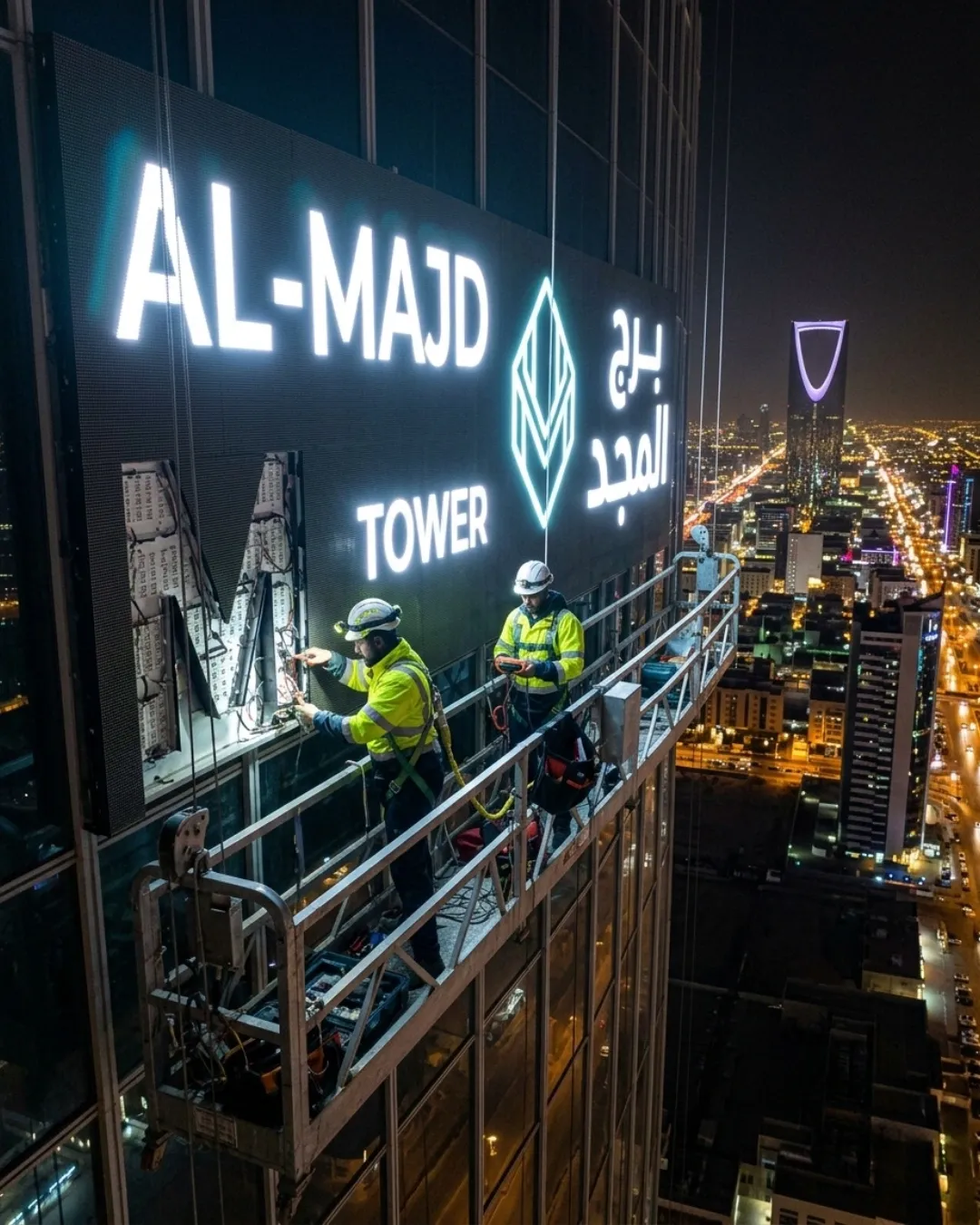
- Periodically, by someone trained: check fixings, frames, seals, wiring and drivers.
- After any major dust storm or heavy rain: look for movement, damaged faces and water inside letters.
Rust streaks below a sign suggest failing fixings, and these should be treated as a safety matter. Have them looked at quickly, even if the sign still looks fine. If you see water, burn marks or exposed wiring, switch the sign off until it has been inspected.
Know what wears out first
A sign is a set of parts with different lifespans. Graphics and drivers usually need attention before the structure does. LEDs tend to dim slowly rather than fail at once, so compare a sign with old photos, since gradual dimming is easy to miss. If the frame is sound, a new face, new vinyl or a replacement driver can often restore it at far less cost than a new sign. Replacement starts to make more sense when the frame has rusted, the face has become brittle, or many parts have failed together.
If your sign has started to fade or flicker, send clear photos from the front, close up and at night, along with its location and height. We maintain signs from Riyadh with support across Saudi Arabia, and can advise whether to repair or replace.
Signboard maintenance is the inspection, repair and cleaning of signs you already own: dead LEDs, cracked faces, peeling vinyl, loose fixings and dust. Exhibition Printing Riyadh provides it from Riyadh for retailers, property owners and facility managers, remaking damaged parts in-house and supporting sites across Saudi Arabia.