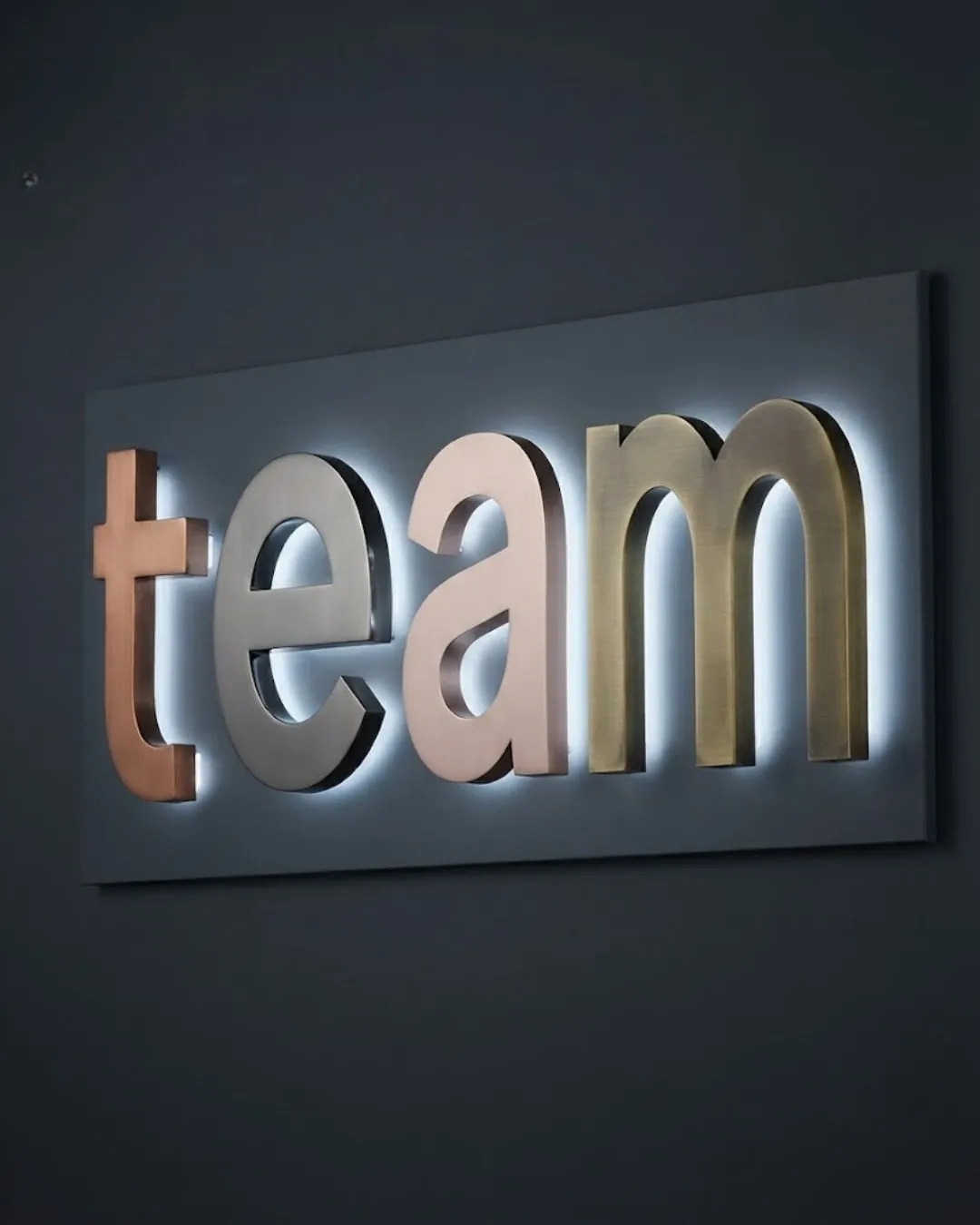
Before ordering an LED backlit sign, ask about five things: the lighting style, the outdoor rating of the LEDs and driver, the depth of the letters, how the sign will be serviced, and what the warranty covers in writing. Most of what separates a good sign from a poor one sits inside the letter, where you cannot see it on the quote or on the day of installation.
Which lighting style are you being quoted?
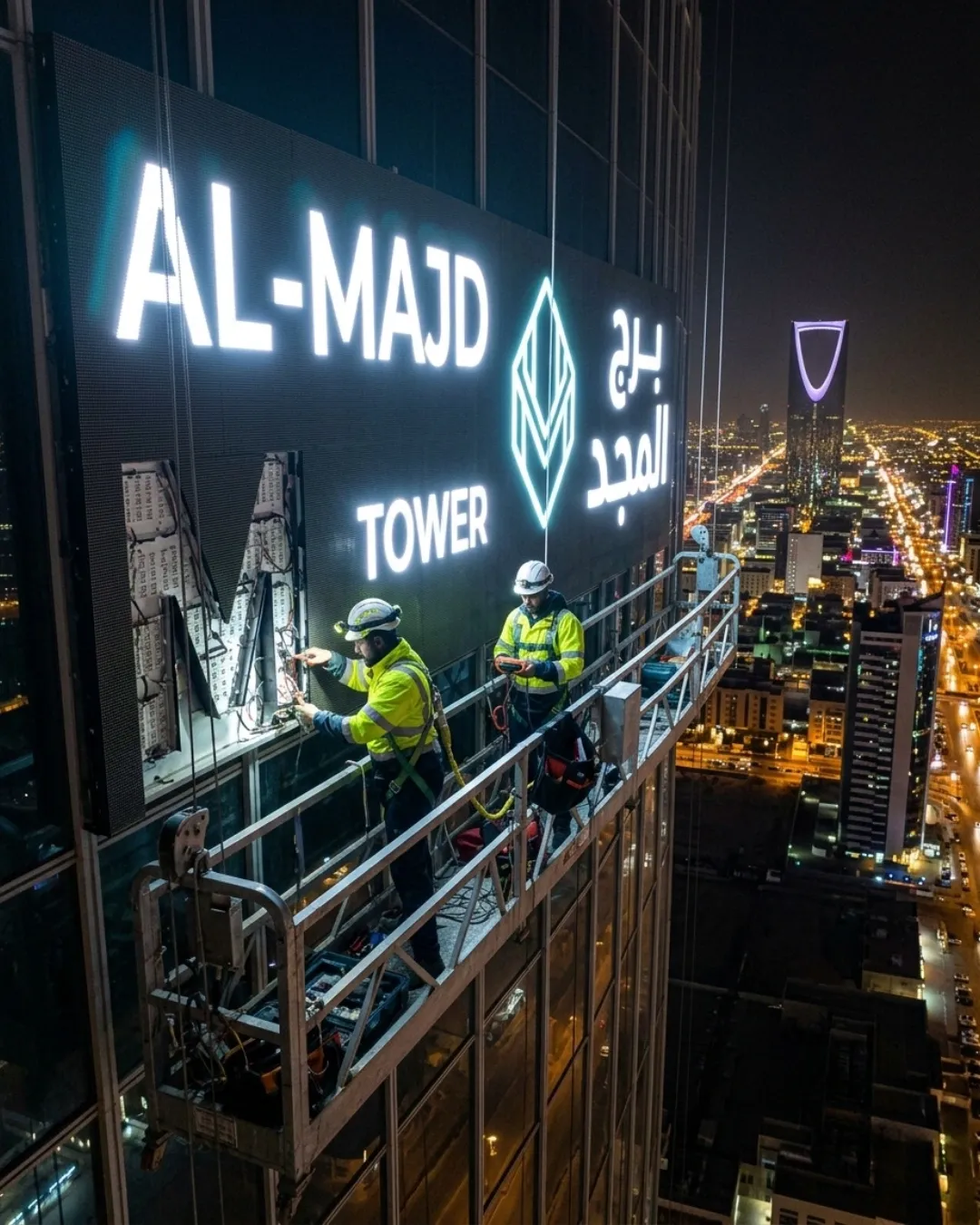
Face-lit letters shine through a translucent front and read strongly from a distance, so they suit main roads. Halo-lit letters have an opaque face and throw a glow onto the wall behind, which looks more restrained but needs a suitable wall to reflect from. A dark or heavily textured surface can swallow the effect. A light box is one lit panel, simple to reprint when the graphics change, though bulkier than separate letters. A routed ACP face lights only the cut-out letters and keeps the rest of the frontage clean.
Ask the supplier to show the exact style in a photo taken at night, as daylight images say little about how a sign performs.
Are the LEDs and driver rated for outdoor use?
The driver converts mains power to the low voltage the LEDs need, and it is often the first part to fail, especially when trapped in a hot, unventilated box. Ask:
- What is the ingress protection (IP) rating of the modules and the driver? This rating describes resistance to dust and water, which matters in Saudi conditions. IP65 is a commonly requested level outdoors.
- What brand or grade are the modules and drivers? A clear answer is a good sign, and you can compare it across quotes.
- Where will the driver sit, and how will it shed heat?
- Is the driver sized with spare capacity, or will it run at its limit?
How deep are the letters, and how are LEDs spaced?
If the LEDs sit too close to the face or too far apart, you will see bright dots or dark patches rather than an even glow. Narrow strokes are the hardest to light, which matters for fine Arabic calligraphy and thin logo details. Ask whether the design needs adjusting so LEDs fit inside each stroke, and ask to see a sample letter lit up if the sign is large or the colour is critical.
What colour and brightness will I get?
White LEDs come in different colour temperatures. Warm white, often around 3000K, suits cafes, hotels and stone frontages. Cool white, often around 6000K to 6500K, looks crisp and carries further. Mixing batches can make neighbouring letters look slightly different, so ask how consistency is controlled.
Brand colours also change when lit from behind. A printed red and a glowing red are rarely the same, so approve a lit sample rather than a colour on screen. Brighter is not automatically better either: on a narrow street, an overly bright sign glares and becomes harder to read. Ask about a dimmer if the street is already well lit, and a timer or light sensor to control running hours.
How will it be powered and serviced?
- Where is the nearest power point, and who brings the supply to the sign? Clarify whether your own electrician or the sign supplier does this.
- Is there an isolation switch, so the sign can be turned off safely for cleaning or repairs?
- How are cables sealed where they enter the letters and the wall?
- Can a failed module or driver be reached without taking the whole sign down?
The last question matters most on high frontages. A sign that needs a lift and a rebuild for a small fault costs far more over its life than one designed for easy access.
What does the warranty actually cover?
Get it in writing, and check separately for LEDs, drivers, the printed or coloured face, and the fabrication. Ask whether labour and lifting equipment are included, or only parts, and who you call if something fails at a branch outside the supplier's home city. Vague promises are hard to enforce later.
Approvals to check first
Malls and managed buildings often have their own signage criteria, including lighting hours. Your municipality may also have requirements for illuminated signs, so confirm the current rules through the municipality or the Balady platform before fabrication starts. Electrical work should meet the applicable rules for your site.
Comparing quotes fairly
A low quote often means shallower letters, unrated components or installation left out. Put the same specification in front of each supplier: letter height, lighting style, component rating, installation, power connection and warranty. Then you are comparing like with like.
We build face-lit letters, halo-lit letters and light boxes in our Riyadh factory. Send a photo of your frontage, ideally taken at night, with the wall width and power point location, and a free design consultation can work through these questions with you.
LED backlit signboards are letters, logos and light boxes lit from inside or behind so your name stays readable after sunset. Exhibition Printing Riyadh builds face-lit, halo-lit and box designs in its Riyadh factory for restaurants, shops, hotels and clinics, and installs them across Saudi Arabia.