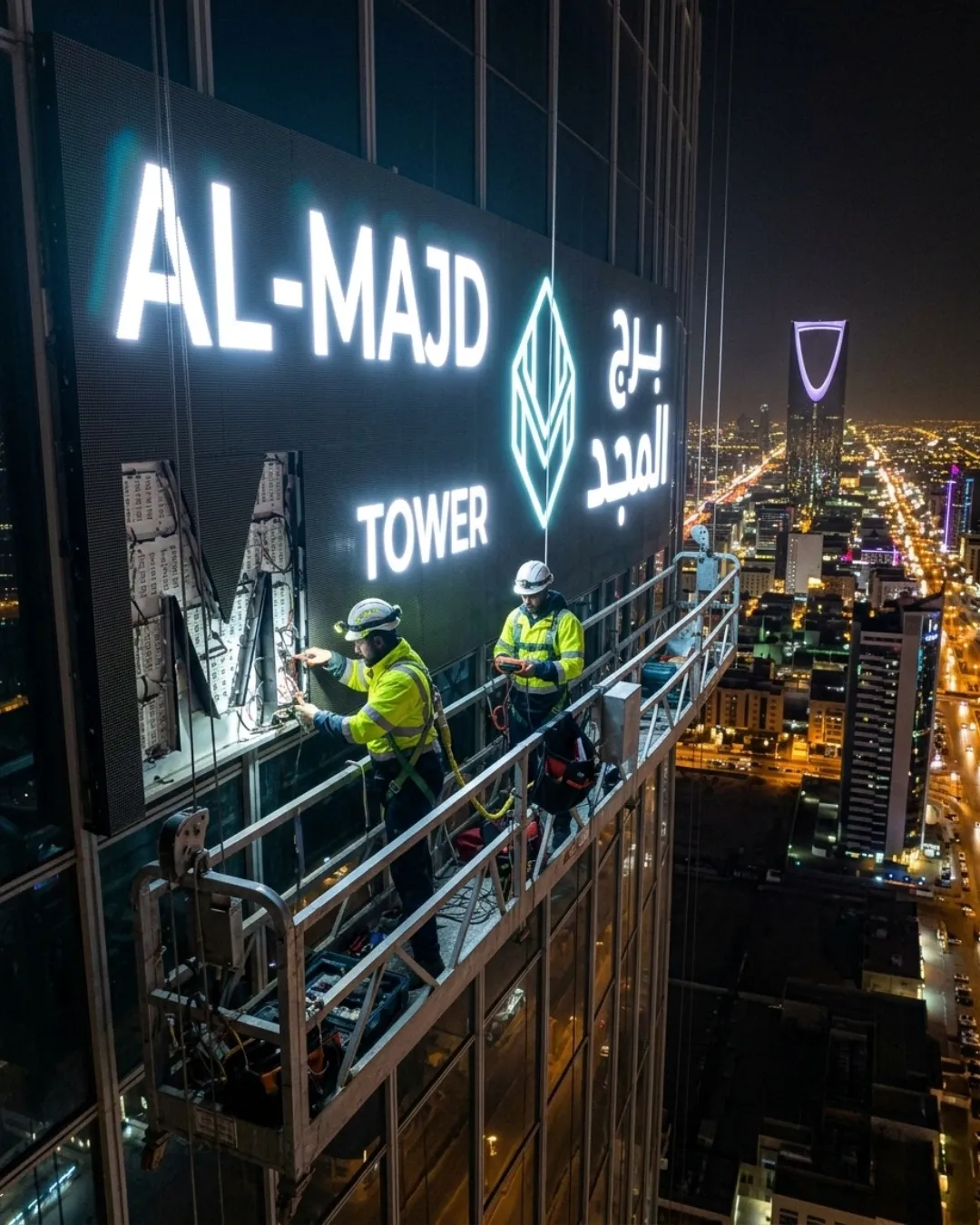
For most shops the answer is not one material but a combination: ACP for the wide background panel, acrylic for lit or colourful letters, and metal where you want a premium finish or a small, durable name plate. If you must pick one, choose by frontage size, whether you trade after dark, and how close customers get to the sign.
The three materials at a glance
- Acrylic: a rigid plastic sheet with strong colour and a glossy finish. It is the usual face for illuminated letters. It scratches more easily than metal and can crack on hard impact.
- ACP (aluminium composite panel): two thin aluminium skins bonded to a core. It stays flat over wide spans, is light for its size and gives a clean, modern fascia.
- Metal: mainly stainless steel, aluminium or painted mild steel. It feels solid and looks expensive, but usually costs more to fabricate and is less suited to very large flat areas.
When acrylic is the right call
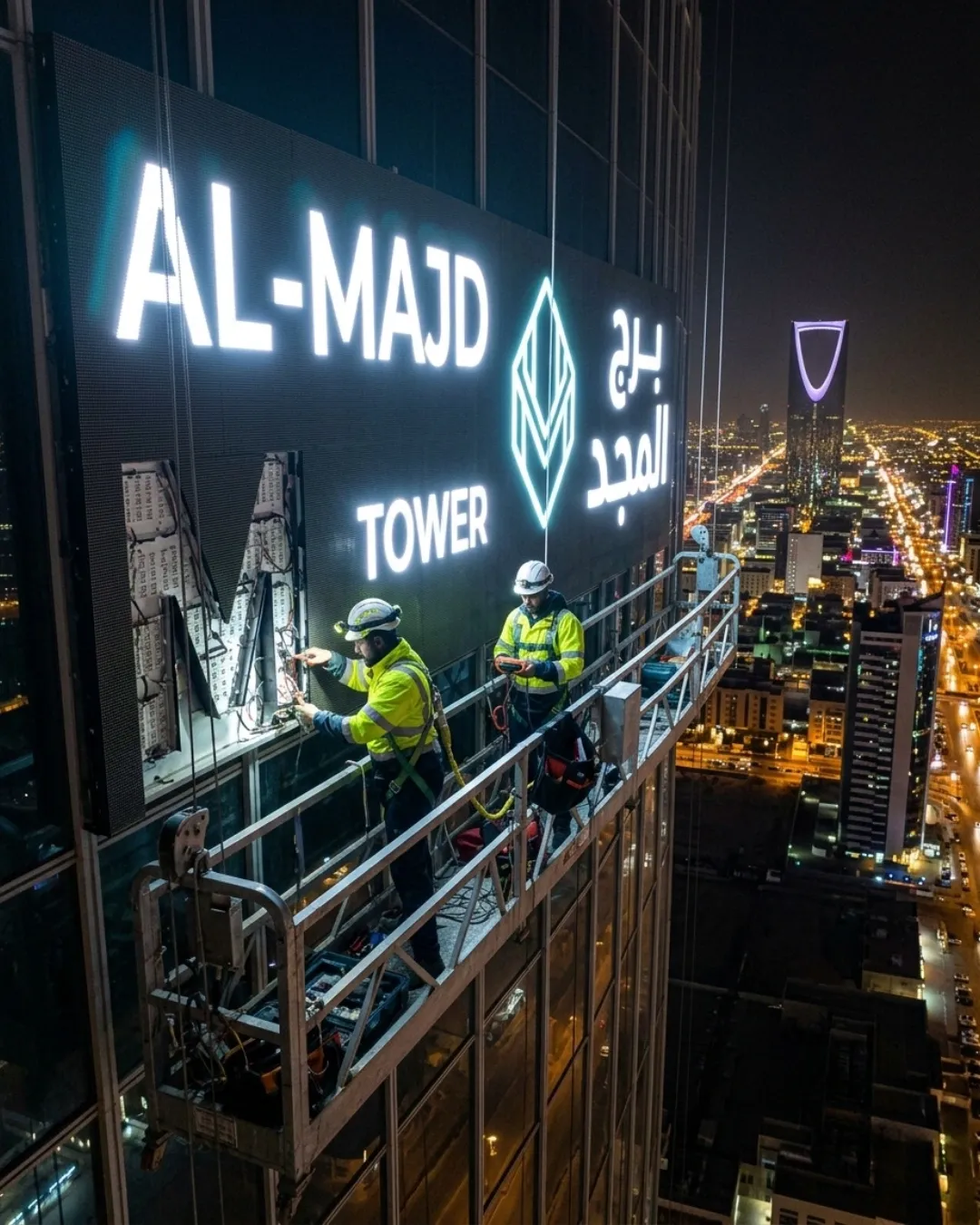
Choose acrylic when colour and light matter most. Restaurants, pharmacies and retail brands trading in the evening often use it, because translucent acrylic spreads LED light through the letter face. It also cuts cleanly by laser or CNC, so it handles detailed logos and the curves of Arabic script well.
Ask which type is being quoted. Cast acrylic generally cuts cleaner under a laser and suits fabricated work, while extruded sheet costs less and is fine for simpler flat pieces. Acrylic also expands in heat more than metal does, so outdoor pieces need fixings that leave room for movement. Rigidly fixed panels can bow or crack around the holes.
When ACP makes sense
ACP is the practical choice for a long fascia, a supermarket frontage or a multi-branch rollout where every shop must look alike. A common build is a framed ACP panel with acrylic or metal letters mounted on it, or a routed face where only the letters glow.
Two details deserve questions. First, the panel needs a proper supporting frame, because a poor frame shows up as ripples across the face in strong side light. Second, ask about the core. Standard polyethylene cores and fire-rated mineral cores behave differently in a fire, and requirements for building facades may apply. Check the current rules with Civil Defense and your building management before ordering large areas of cladding.
When metal earns its cost
Metal suits jewellers, law firms, clinics, hotels and head offices, where the sign needs to signal permanence. It also works well within arm's reach, because brushed or mirror stainless resists the knocks that would mark acrylic.
The grade matters more than the name:
- Stainless 304 is a common choice for inland cities such as Riyadh.
- Stainless 316 resists salt better, so it is worth asking about for coastal sites in Jeddah or Dammam.
- Aluminium does not rust, is light, and takes paint or powder coat well.
- Mild steel is strong and economical, but it rusts as soon as its coating fails, so inspect it regularly.
Mirror finishes show fingerprints and reflect the sky, which can reduce contrast outdoors. Brushed finishes are more forgiving.
Quick match by type of shop
- Cafe or restaurant open late: ACP background with lit acrylic letters.
- Pharmacy or clinic: lit acrylic for visibility from the road, with a small metal plate at the entrance.
- Jewellery or premium boutique: metal letters, possibly halo-lit, on a stone or dark ACP background.
- Supermarket or wide showroom: ACP fascia with large lit letters, because the span is too wide for individual panels of other materials.
- Mall unit: follow the landlord's design criteria first, as many malls set the materials, depth and lighting they allow.
- Short lease or trial location: flat printed ACP is often easier to justify than fabricated metal letters.
Before you commit
Check viewing distance, since a rough guide is about 25 mm of letter height for every 3 metres. Look at both Arabic and English at full scale, because the two scripts have different visual sizes. Ask to see a material sample in daylight, and check whether your municipality requires a permit for the sign's size and content. Rules vary, so confirm them through your municipality or the Balady platform.
Our Riyadh factory cuts and fabricates all three materials with in-house CNC, laser and UV printing equipment. Send a photo of your frontage with rough measurements and a free design consultation will help you compare the options for your site.
Signage production means one factory taking your sign from drawing to fixing. Exhibition Printing Riyadh fabricates acrylic, ACP, LED backlit, metal, PVC, wooden and reception signs in-house in Riyadh, along with ACP cladding, unipoles, height barriers, directional, construction and wall branding, for shops, offices, developers and venues across Saudi Arabia.